

 Sofia De Sousa
 *Updated on May 21, 2026
A nation-founding holiday is coming, and that means one thing: Locro!
A typical Argentine dish, locro is the mandatory meal to celebrate Argentina’s 1810 May Revolution and subsequent first independent government. No self-respecting local restaurant can go through the Semana de Mayo (May Week) without offering a locro on their menu. Like celebrating Thanksgiving without a turkey — impossible.
The recipe has its slight variations, but you can basically describe a decent locro as a corn, beans, and pumpkin stew with a range of meats that includes sausage, pork, bacon, and beef. It’s hot, hearty, strong, and delicious, and usually served with a glass of red wine and a beef empanada, because…well, this is Argentina.
According to Argentine chef Agustin Winkelman, the secret of cooking a locro is doing it really slow, and it demands a lot of attention. Not stirring it correctly can result in burning the dish and completely change the way it tastes: so, if you’re cooking it at home, beware.
The origins of locro
Locro’s origins are tainted with the Spanish invasions, economic crisis, Argentine pride, and a united working class. According to food scholar Carina Perticone, locro — from the Quechua word ruqru — is a dish with roots that spread throughout the Andes region. It’s not necessarily an Incan dish — as its actual origin remains uncertain — but it’s associated with places that have a history of corn culture.
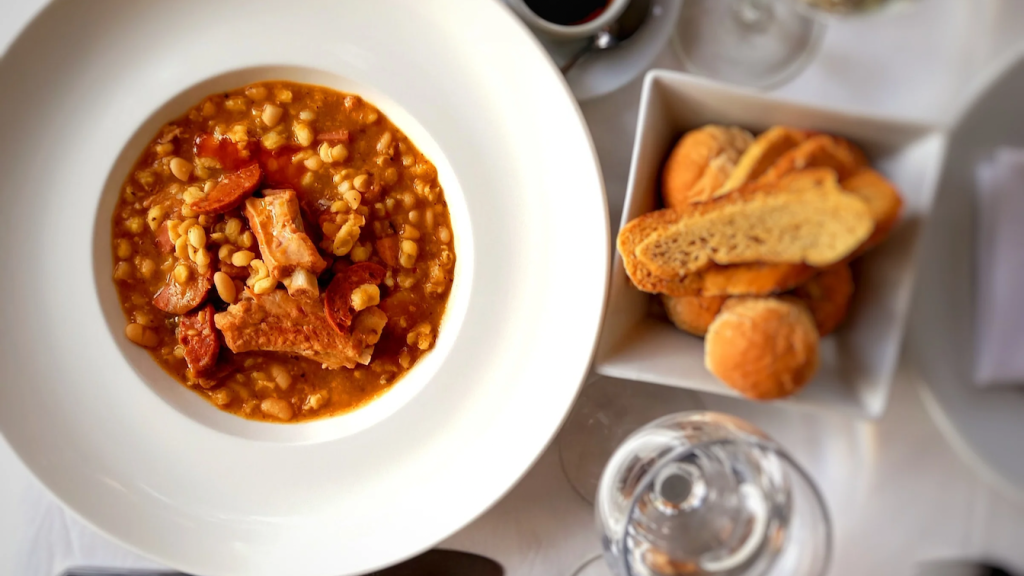
According to records, locro first emerged in Buenos Aires’ rural areas in the 1820s. It didn’t reach the city until the 1840s but was still considered a specifically rural dish, according to the recipe in the first Argentine cookbook, which was published in 1888, and written under a pseudonym by Susana Torres de Castex.
Its status as a national holiday dish is quite recent, approximately 60 years old — before that, the typical Argentine food was barbecue beef ribs, or asado. The locro trend started in the 1960s, with the boom of folklore music and a cultural search for national identity. Trade unions brought it to the mainstream with the big soup-kitchen stews they organized for International Workers’ Day: it was cheaper than asado, but still patriotic. The dish went on and spread onto other national holidays, such as May 25th or July 9 (Independence Day), making it a current food classic.
If you’re looking to have some locro on May 25th, most bodegones in Buenos Aires will be offering their take, but we also highly recommend the following spots:
- El Refuerzo (Chacabuco 860, San Telmo)
- Santa Evita (Julián Alvarez 1479, Palermo)
- Las Rojas (Av. Dorrego 1003, Chacarita)
- El Imparcial (Hipólito Yrigoyen 1201, Downtown)
- La Morada Regional (Larrea 1336, Recoleta)
- La Paceña (Echeverria 2570, Belgrano)
- For a vegan option, you can also try Casa Munay (Gorriti 5996, Palermo)
As it is a highly demanded dish during national holidays, restaurants preparing locro tend to ask for reservations, even for take-out orders. So, if you’re planning on trying the most Argentine food there is, make your reservation quickly.
