
 Martina Jaureguy
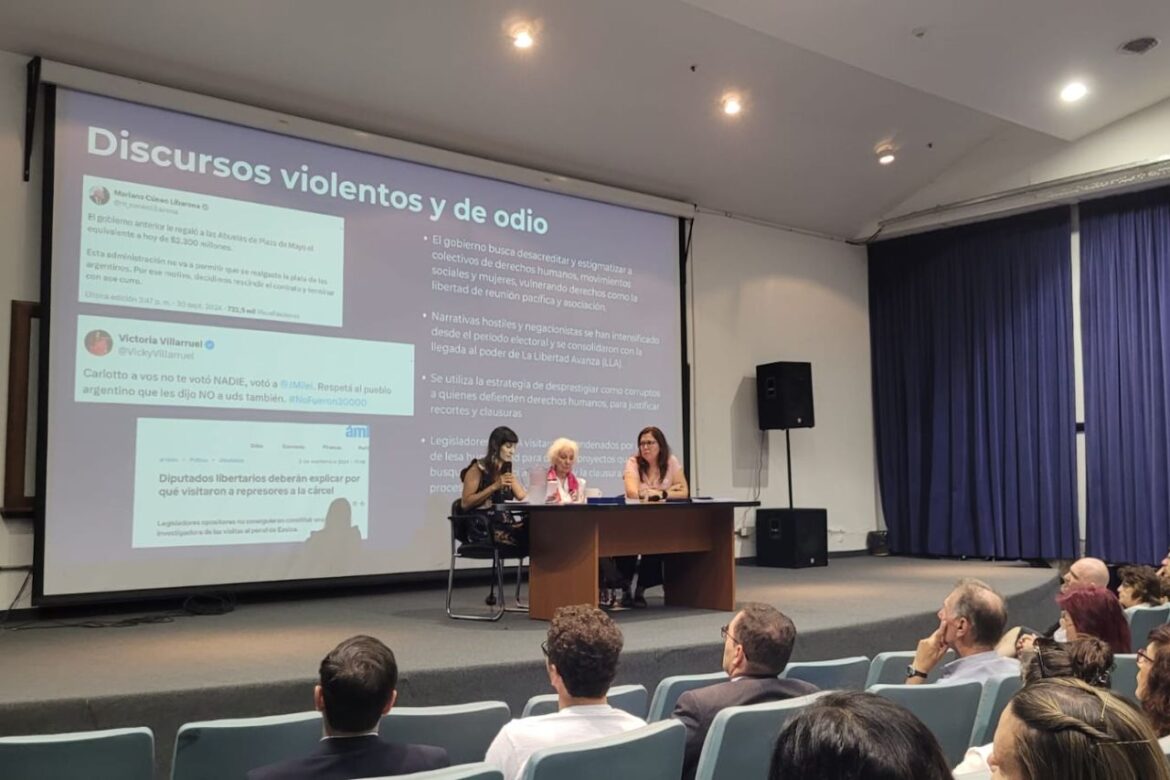
 Grandmothers of Plaza de Mayo released an end-of-the-year report on Wednesday criticizing the axing of memory policies carried out by President Javier Milei throughout 2024.
In the document, they said that his government has carried out “regressive measures” that “endanger” the process of memory, truth, and justice regarding the state terrorism crimes committed between 1976-1983 in Argentina.
They added that these “setbacks,” as they called them, could also lead to violating international agreements on human rights that the Argentine state has committed to.
These measures include not only squashing policies and defunding public organizations that work to solve and repair the consequences of those crimes, but also “a public and open promotion of denialism” and “hate speech” against human rights organizations.
“The government’s focus on the economic crisis should not lead to the undermining of areas that are crucial for the judicial process” regarding dictatorship crimes, the report said. “The Milei government’s policies could entail a risk for guaranteeing the right to truth, justice, reparation and non-recurrence.”
The text went on to cite international agreements that Argentina has adhered in order to establish the state’s obligation to investigate and punish human rights violations, which could potentially be violated by the government. “Impunity can greatly contribute to the recurrence of those violations,” they wrote.
In the document, the Abuelas outlined several measures Milei took against human rights policies. Among them, slashing the budget for the National Genetic Database and closing the investigation unit of the National Identity Commission. These two public organizations worked together trying to reunite children of dictatorship victims who were appropriated with their biological families.
“Today, the founding rocks of that search are at stake, and seeing how the tools we created are being destroyed is extremely concerning for us.”
The Abuelas said they are worried about the preservation of memory sites, given that budget cuts have meant conservation works and archeological excavations are on stand-by. They also mentioned the “reiterated” presentation of bills that may affect judicial processes addressing crimes against humanity and the closure of a team of archivists that analyzed military documents that serve as evidence in trials.
“These setbacks are happening in a context in which the national government is openly and publicly promoting denialism, spreading hate speech and persecuting those who defend human rights,” the organization said.
Government officials, they said, “banalize or relativize dictatorship crimes and place the legal proceedings against the responsible parties into question.”
In line with this, they mentioned a visit six deputies from ruling coalition La Libertad Avanza paid a group of convicted dictatorship criminals in jail back in July. Although the deputies framed it as a humanitarian visit, the human rights organization said that they were having “meetings to discuss a bill that would have lowered their sentences.”
The government attacks human rights organizations, social movements, women and other groups as the Milei administration attempts to “discredit their fight, stigmatize them and undermine the right to pacific gatherings” with the goal of defunding public policies. They called on human rights leaders and organizations from the world to denounce and fight this.
