
 Buenos Aires Herald
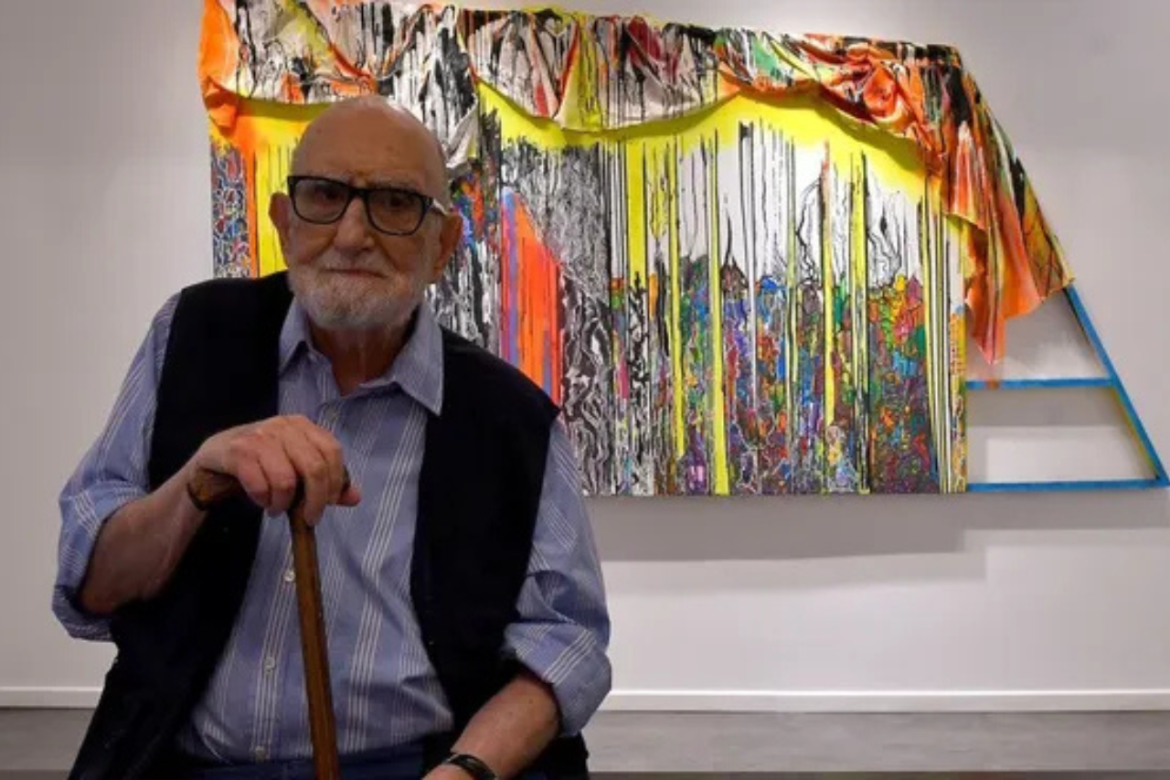
Argentine artist Luis Felipe Noe, a master of Latin American neo-expressionism, died on Wednesday at 91. The passing was announced on social media by the Luis Felipe Noé Foundation.
“It is with deep regret that the Luis Felipe Noé Foundation announces the passing of Luis Felipe Noé, a pivotal artist whose work and thought profoundly transformed Argentine and Latin American art,” read the statement.
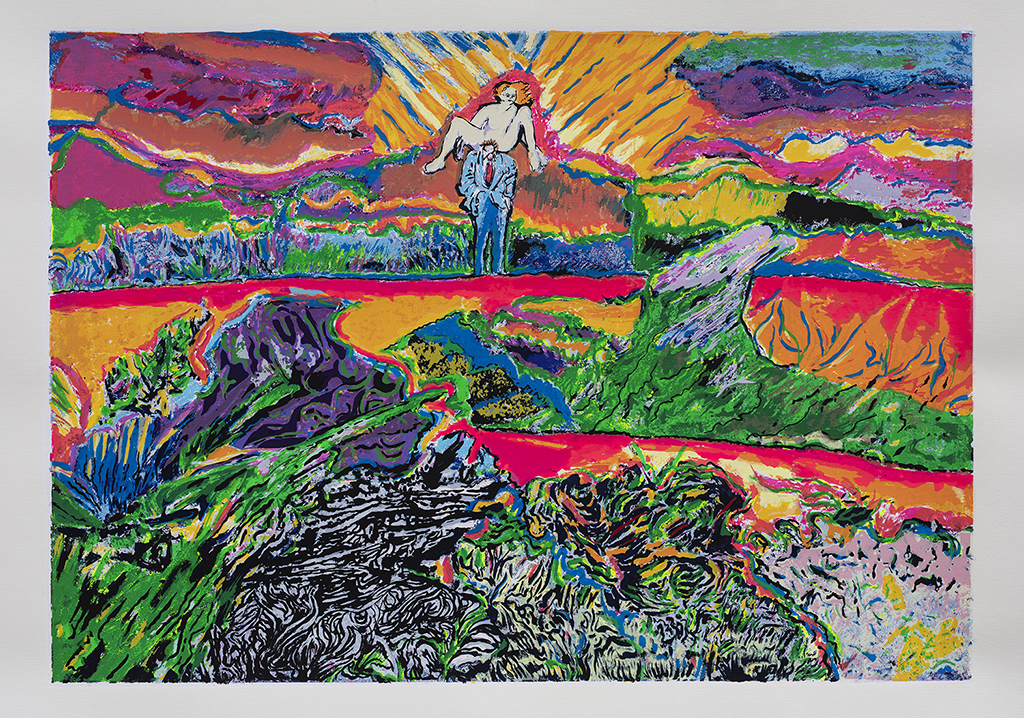
Noé, known affectionately as Yuyo, was a painter, theorist, and teacher. His work has been a synonym of vibrant, energetic colors and political comment, through a search for patterns within chaos, which appears in his paintings as an unavoidable — and even welcome — structure for reality.
Formed in Horacio Butler’s studio in the 1960s, he was a member — along with artists Ernesto Deira, Rómulo Macció, and Jorge de la Vega — of the Nueva Figuración group, a movement that aimed to transcend the abstract/figurative dichotomy and transformed Argentine painting in the middle of the 20th century.
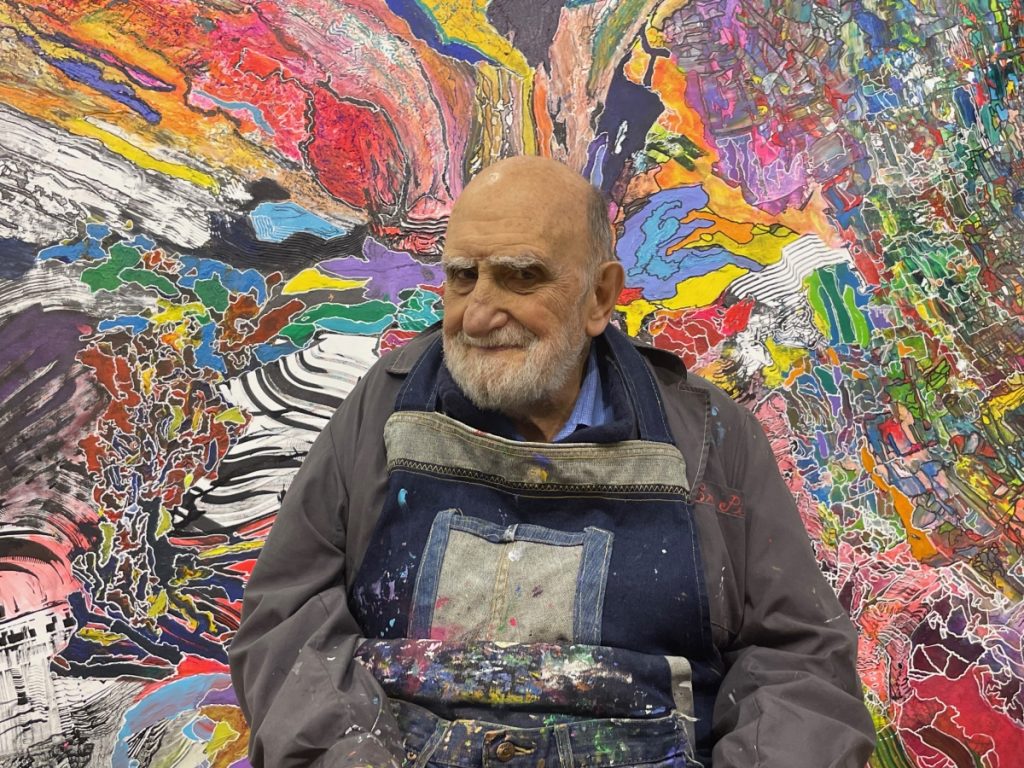
Noé was born in Buenos Aires on May 26, 1933. He began his career as an art critic for El Mundo newspaper and made the first of his over 120 solo exhibitions in 1959 in Buenos Aires. He presented his first book, Antiestética, in his 1965 exhibit “Noe + Collective Experiences” at the Museum of Modern Art in Buenos Aires.
In the book, he exposed his thesis on chaos as structure. In addition to being a practising artist, he was also an insightful and sharp critic of contemporary artistic canons. In the 1960s, he distanced himself from painting and explored other mediums like sculpture and installations.
In 1976, after a civic-military dictatorship seized power in Argentina, he left the country and settled in France. He lived there for almost a decade, exhibiting his work in Paris, New York, and Buenos Aires. During his European stay, his work tapped into the political violence in Argentina, a constant theme throughout his career. Some of his paintings and drawings have focused on the dictatorship’s death flights and the murder of political protesters by police forces in democracy.
He returned to live in Argentina in 1987.
“I don’t know whether art affects politics, but politics does affect the human conscience, and artists are a part of that,” he said to Pagina 12 in 2005 during a collective show focused on political activists Maximiliano Kosteki and Darío Santillán, who were killed by police in 2002.
An undisputed referent in the Argentine art scene, Noe had retrospective exhibitions in the Argentina Fine Arts Museum (1995), the Fine Arts Palace in Mexico City (1996), and the Rio de Janeiro Museum of Modern Art (2010), among others. In 2009, he represented Argentina at the prestigious Venice Biennale.
Yuyo earned dozens of prestigious awards, including the John Simon Guggenheim Memorial Foundation fellowship twice, in 1965 and 1966. He later received the Grand Honorary Award of the National Arts Fund (1997) and the Diamond Konex for Visual Arts (2002). In 2006, he was named an Illustrious Citizen of the City of Buenos Aires by the City Legislature, and earned a Lifetime Achievement Award by the National Academy of Fine Arts in 2015.
Noé is survived by his two children, artist Paula Noé-Murphy and filmmaker Gaspar Noé.
