

 Ernesto Picco
 Words by Ernesto Picco. Photography by Rudja Santos. Cover illustration by Sebastián Angresano. Translated by Jacob Sugarman and Juan Décima.
This is the third and final piece in a series of three long reads about Guyana, French Guiana, and Suriname. It was reported with support from the Pulitzer Center. The full version was published in Anfibia Magazine, in Spanish. Click here to read the original.
No one knows what they’re carrying, and no one asks. They scurry beneath the sun with small, medium and large bags of all kinds hanging from their arms or slung across their shoulders. Their backs are hunched. They carry old cardboard boxes, colorful crates, bottles, cans, and barrels. The different languages create a buzz like the flies of Babel. On both banks of the Maroni River, people shout to each other in Dutch, French, Portuguese, Sranan Tongo, and other variants of Creole. The same tongues produce a low murmur of haggling and whispered secrets.
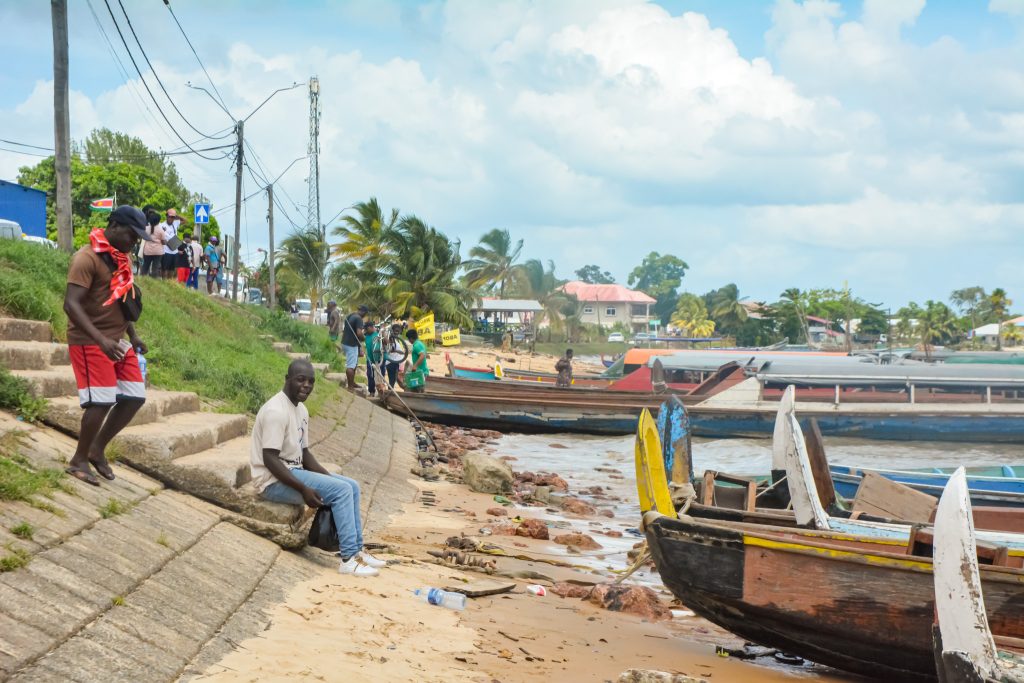
Above the din you can hear the sharp whirring of small boat engines. They journey back and forth from one bank of the river to the other. On one side, the boaters receive everything, charge in Euros or Surinamese dollars, and escort the travelers across. The twelve minutes that separate Saint Laurent, on the French Guiana side, from Albina, on the Surinamese side, are a short pause between two anthills.
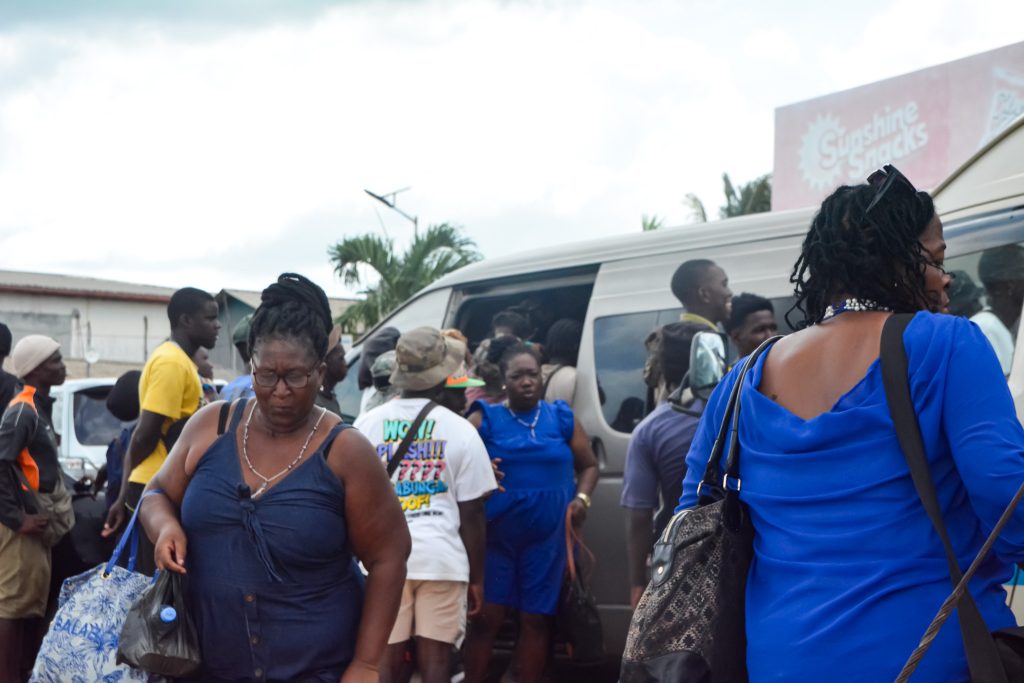
Albina has almost no coastline; the water gives way to a steep bluff of earth and stones. A line of pickup trucks and minivans with open doors and trunks await as if they’re about to take flight. Upon reaching Suriname, you can walk two hundred meters to the left to the customs checkpoint or simply continue ahead and enter the country with whatever you’re carrying.
We cross over with Rudja in one of the boats; my travel companion takes photos in silence. The boatman doesn’t speak to us. None of them ask questions, see anything or inquire who they’re carrying.
The Swiss-based Global Initiative Against Organized Crime, funded by the United States government, warns that “Suriname is among the preferred transit points for cocaine shipped from Latin America to Europe and allegedly serves as a distribution center.” It adds that “arms trafficking is closely linked to drug trafficking.”
The brown water we traversed had been polluted years before by the mercury that miners use to separate gold from rock and sediment. Nobody knows exactly how many miners there are, but there are reports of as many as 20,000, including Brazilians and the descendants of runaway slaves, who were known as cimarrones, who operate in organized gangs hidden in the jungle. They dig in their own small craters or roam the lands of large industrial mining corporations like China’s Zijin or Canada’s Iamgold. They are called garimpeiros, and they are known to rob each other and clash with the private security forces of these major companies. Dozens have died in shootouts and mudslides, the most serious of which occurred in November 2023 in the town of Brokopondo. There, 15 garimpeiros were buried after the mountainside they had been mining for gold collapsed.
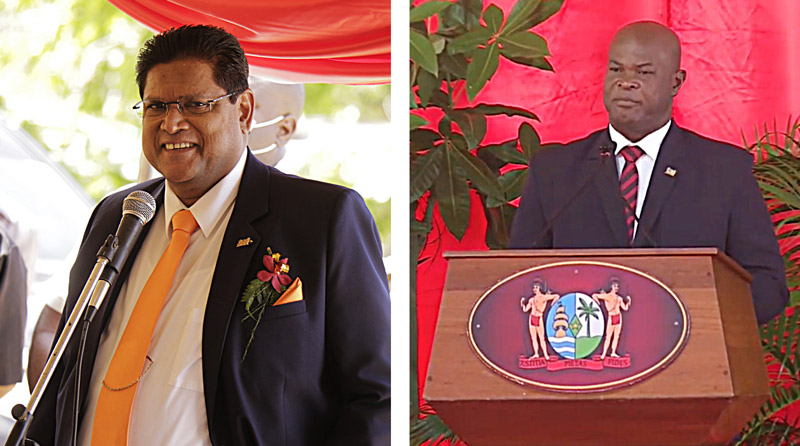
Two days after the collapse in Brokopondo, Ronnie Brunswijk, Suriname’s vice president at the time, toured the area and declared that “it’s useless trying to reason with gold diggers.” Brunswijk, an enormous descendant of a cimarrón himself, has a biography that almost defies belief. During the 1980s, he was a bodyguard for then President Desi Bouterse before the two had a falling out over political differences. Then in the 1990s, he founded the Jungle Commando, which fought in the Surinamese Interior War. Brunswijk was also convicted of drug trafficking, played football for the country’s Robinhood Club, and founded the General Liberation and Development Party (ABOP), which has allied itself with Chan Santokhi, a former police officer and leader of the Progressive Reform Party (VHP), who was president of Suriname between 2020 and July of this year.
Santokhi and Brunswijk came to power by luck: they were to confirm the discovery of quality reserves containing seven billion barrels’ worth of crude oil. In neighboring Guyana, a similar discovery two years earlier transformed the country into the fastest-growing economy in the world: the IMF estimated growth of 42.8% in 2024.
As the bow of the boat gently glides into the Surinamese soil, we jump ashore and begin climbing the dirt slope. The boatman looks the other way.
* * *
In 1949, Suriname took its first steps toward independence. Responding to the new post-war political climate, and hoping to free itself from certain maintenance costs, the Netherlands granted its territory partial autonomy, allowing the election of a local parliament to make its own policy decisions while retaining control over defense and foreign relations.
That year, the first Surinamese political parties were organized. They were determined not by ideology but by ethnic origen: the Javanese and Hindustanis formed the Muslim Party; the Afro-Surinamese the National Party; the Indo-Surinamese the United Hindustani Party; while a remnant of the Chinese population, Catholics and some light-skinned peoples formed the Progressive Party. These divisions have endured to this day. But during the 20th century, the parties were united in their desire to cease being a European colony.
“The friction started in the early 1960s,” historian Eric Jagdew tells us in his office at the Anton de Kom University. In particular, there was discontent with Dutch foreign policy, which supported South African apartheid, and which was unacceptable to the local population. During that time, revolutionary movements were emerging in the Caribbean, and in 1963, the territory celebrated the 100-year anniversary of its emancipation from slavery. All of this created a climate in which the Surinamese began speaking of independence. In an attempt to calm the population, the Dutch constructed a university, which opened in 1968. But it wasn’t enough. Guyana had already gained liberation from the British, and independence felt imminent in Suriname.
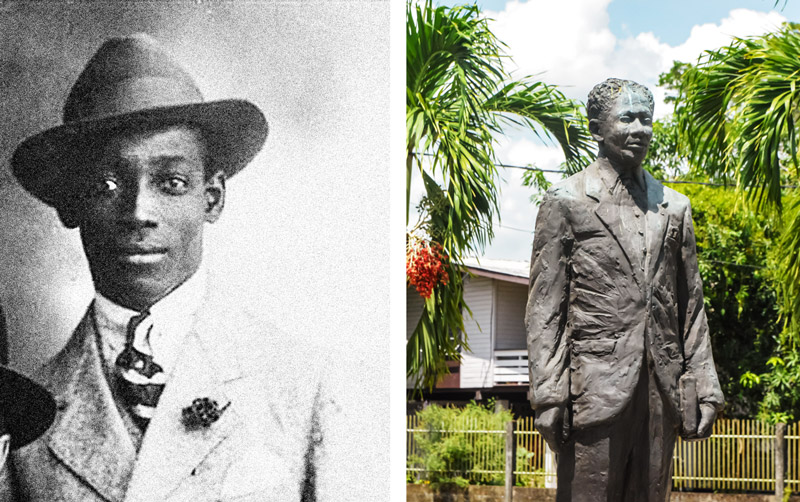
In the late 1960s, the university’s first students discovered the work of Anton de Kom (1898-1945), a Surinamese anti-colonialist who fought against the Nazis in Holland and wrote We, the Slaves of Suriname, the first book to tell the history of his country from the perspective of its African peoples. It was circulated in mimeographed copies until a local publisher reissued it in 1971. The photographs of de Kom portray an elegant runaway slave in a suit and sideways hat containing a certain air of circumspection. Academics, politicians, and independence leaders rescued him from oblivion, making him a figurehead for their movement. They had no national heroes of their own.
The leaders of the Indo-Surinamese and Afro-Surinamese parties signed an agreement and declared independence in November 1975, without unrest or violence. In Amsterdam, they perceived this was an opportunity. There was almost nothing of value in Suriname: the lands were unsuitable for oil drilling; gold mining was undeveloped; and bauxite, which was sold to the United States for its aluminim industry, had begun to fall in price.
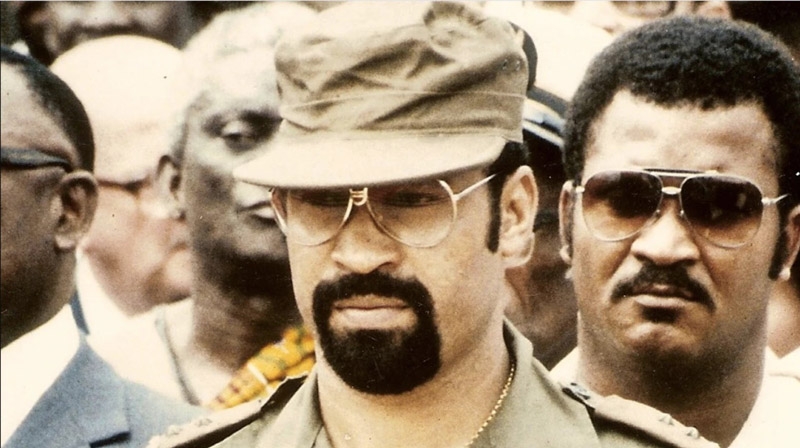
For Jordan Ferrier and Henck Aaron, the founders of a National Party that had become the face of the new country, governing on their own was not easy. They were a teacher and a former bank employee tasked with managing a state that had not yet been formed. During their administration, 40,000 people left the country to live in the Netherlands. Bauxite lost its value in the international market, and the young country soon entered an economic and social crisis. Then the military got involved. Desi Bouterse, a thirty-something general with a goatee and gold-framed glasses, had returned to Suriname after training in the Netherlands and helped build a national army during the independence process. In 1980, he led a group of 16 generals that overthrew the Ferrier and Arron government and seized power.
The military had no clear ideology or ambitions. They clashed with each other, frequently changed leaders, and imposed authority through martial law and violence. They were allies of Fidel Castro’s Cuba, because they recognized themselves as anti-colonialist and nationalist, and João Baptista Figueiredo’s military dictatorship in Brazil, because they had money invested and hoped to diminsh Cuba’s influence worldwide.
“Brazil gained influence in the country in three ways,” explains professor Jerome Eggers in Jagdew’s office. “It invested in telecommunications, military equipment, and culture. Suriname began teaching Portuguese and gained access to Brazilian television channels. Soon, we were all fans of Xuxa.”
By then, the world had turned its back on the country after a crime its government would never live down: the December Murders.
On the night of December 8, 1982, Bouterse ordered the execution of fifteen opposition leaders: journalists, lawyers, businessmen, university professors, military personnel, and a union leader. During that time, and despite their inner contradictions, the military itself revived the image of Anton de Kom and gave his name to the university built by the Dutch as an expression of anti-colonialism.
* * *
The Indira Gandhi Route is a grey, two-lane road that cuts through the jungle. We’re traveling in a battered white Toyota with its steering wheel on the righthand side, like all cars in Suriname. Maikel, the guide who recommended a contact to take us to Brokopondo, is a small, sixty-something man with a large head. He speaks five languages effortlessly: English, Hindi, Dutch, Sranan Tongo, and Spanish.
Two gold rings gleam on the index finger of the only hand he uses to steer. We’re trying to reach one of the areas known for illegal gold mines. Maikel says that if we get close enough, we might find them on the side of the road. He says the “indianos” — a word he coined for the indigenous people who live in the jungle and are sometimes seen along the Indira Gahndi — are “lazy” and clarifies that they are nothing like Indians from South Asia. People like his grandparents.
“The Indians came for the labor contracts,” he explains. “Not the Afrians; they came as slaves.”
His words speak to the rivalry that exists throughout the Guyana region between Hindu and afro peoples. Hindus make up 27% of Suriname’s population. Twenty-one percent are Maroons, the descendants of freed slaves, and 15% are Creoles of African extraction. The indigenous make up less than 4%. Another 13% are Javanese and 2% are Chinese — a small but powerful community.
“The Chinese take everything from us,” says Maikel. “They take the gold and wood we have here. Then they use it to make furniture and sell it to us at an elevated price. That work is done by Africans. That’s what Africans are good for.”
On the road, we see billboards written in Hindi, Chinese, Dutch, and English. There are ads for a bank, an investment firm, Parbo beer, and a perfume called Borgoe that promises “gold in a bottle.” Suriname’s obsession with gold is such that they’ve assigned it its own scent. We are surrounded by jungle.
Maikel pulls over where there’s a clearing of fallen trees. He explains that the garimpeiros used to be visible from the road, but that they are increasingly moving deeper into the jungle after mining all of the gold from the earth nearby. We decide to join Rudja. Maikel declines.
* * *
They called Desiré Bouterse “Desi.” In 2007, he and 25 other military commanders of various ranks were indicted by then Minister of Justice Chandrikapersad “Sheriff” Santokhi. The trial dragged on for twelve years. In 2010, while the investigation into the December Murders was ongoing, Bouterse ran for president as the leader of the National Democratic Party (NDP), Suriname’s first multi-ethnic political organization, and won.
Bouterse managed to stabilize the economy — thanks in part to a rise in the international price of gold — and established a universal healthcare system, a minimum wage, and a national pension system. But the trial against him continued, and in 2019 he was sentenced to 20 years in prison for his involvement in the assassinations.
* * *
“Have you seen the damage?”
Professor Dennis Wip almost whispers the question. Yes, we’ve seen the damage. But we need his help to understand. We open our laptop in the lab where he’s worked as a physics professor for over 40 years. We show him the photos that we took in the jungle. We tell him that we trekked through a grassland bordering the road to follow the trail of destruction. We explain that we made the journey alone, with Rudja, because our guide refused to join us and stayed in the car. We recount that at the beginning of our expedition, we encountered a terrain filled with dead, grey trunks standing straight in the dry earth — the remains of trees whose crowns and arms had been severed.
“They deforest first,” professor Wip says looking over the photos, “and then they come with excavators to remove the soil.”
After passing the field of dead trees, we reached an area that had been completely cleared. The ground had gone from bush to dirt to an orange grassy substance into which our feet sank with each step we took. Rudja used a long branch that she dug in and out of the ground for support, while I relied on my sense of balance. It was like walking on top of a cake. Rows of abandoned drums with the same orange hue appeared before us as though they had emerged from the earth.
“They’re cleaning the land and searching for a gold deposit,” professor Wip explains. “These are very skilled people. The Brazilians know just by putting their hands in the earth and observing. Then the people come with metal detectors, and they start digging. They stir up the surface of the soil and use electricity, which they generate with gasoline, to pump in water to soften the earth. This is how they form craters and unearth everything inside.”
In these craters are gold particles, mixed with other minerals in the soil. They separate these with mercury, which is poisonous. Section by section, large craters opened in the ground before us containing brown lagoons — poisoned swamps where the miners had extracted everything they could before moving on.
“You need approximately three kilograms of mercury for every kilogram of gold you extract,” Wip explained. “This toxic material has contaminated land, water, and air. And it has entered the food chain. Microbes and small fish eat it, making its way to larger animals and people. It causes damage to the kidneys and the brain, as well as genetic malformations. We are breathing mercury in the city, because what they extract in the countryside is later sold to businesses where gold is burnt in order to purify it even more. Toxic gases are released in to the air through chimneys.”
We showed him the picture of a loader we saw in the distance once we were finally able to get moving. We had strayed close to a thousand meters from the highway, following the path of destruction.
“This is no man’s land,” Wip tells us. “The police doesn’t control this in the countryside. They don’t want to, the gold is useful to them. It goes to the shops downtown, and from there it is sold to the government itself, who then exports it. That’s why they give them a free pass. There are armed groups that don’t extract anything and just steal from each other, and they don’t control that either.”
***
One night we had dinner with Edward Lee. He is marketing expert who runs a magazine focusing on current events and the economy that is part of a network of small and medium-sized businesses in Suriname. Edward is a living example of the country’s multiethnicity: he has a Chinese father and an Indian mother. His wife is half Dutch, half Indian.
“And our kids are Surinamese,” he explained. “We live in one culture. If there’s any discrimination, it’s class-based. A black man, for example, can be respected if he has money and a high social standing.”
He tells us about the Chinese: although they are only 2% of the population, they control almost 70% of businesses through supermarkets, restaurants, and retail shops. They are also heavily involved in public works. This is why there are large construction sites in Paramaribo with signs written in Chinese.
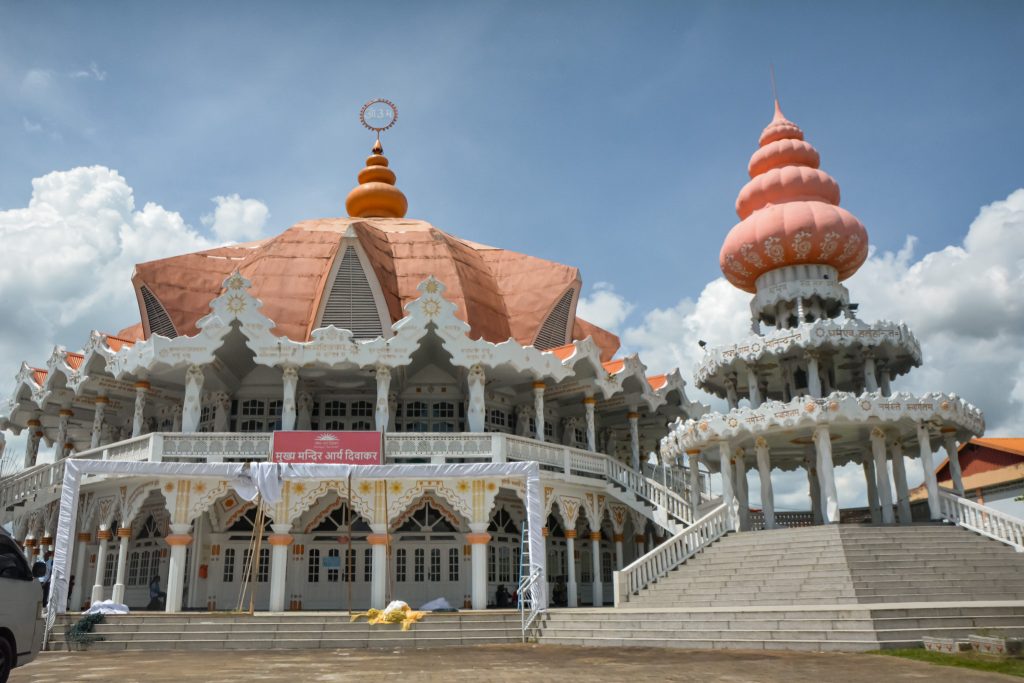
Chinese constructions pop up across the city alongside Dutch colonial architecture, wooden buildings, and many temples from different religions, among them colorful Hindu temples, synagogues, and a large Catholic cathedral. The capital has a population of 237,000, a little over a third of the country. Paramaribo lives with its back facing the jungle, an unchecked no-man’s land that covers 90% of the country’s territory.
For Edward Lee, the expectation that oil is set to change Suriname’s productive matrix has placed the country at an inflection point.
“Mining is still our main activity, but corruption is difficult to control. With oil and gas, are economy is going to boom: we will receive around US$20 billion in the next five to 10 years. We might be able to change our place in the world.”
***
After hurling insults and accusations at each other in every public speech they made, Bouterse and Santokhi faced off in the 2020 presidential elections. Santokhi had a seat in the National Assembly as the leader of the Progressive Reform Party (VHP, for its Dutch initials). He obtained the majority of the votes and won the presidency despite leading a party strongly aligned to Hindus.
Bouterse handed the presidential sash to Santokhi, the man who as justice minister had attempted to start legal proceedings against him, in an open-air ceremony at the Plaza de la Independencia on July 16, 2020. The place was empty because of the pandemic and the two old enemies were wearing face masks, like muzzles.
Santokhi then began negotiating the oil extraction that promises to change Suriname’s destiny with French company Total Energies — the world’s fourth-largest oil company, with operations in over 130 countries. They will team up with local company Staats Oil and begin extractions in 2028.
Bouterse’s final defeat came when the judiciary sentenced him to 20 years in prison for the December Murders. In 2023, he fled without leaving a trace. Santokhi searched for him unsuccessfully until December 24, 2024, when Bouterse’s wife informed authorities that her husband had passed away. She went on to say that his body would be taken to their Paramaribo residence for the wake. The official statement was very brief: it only said that the former president had died of natural causes. It was never revealed where he hid during his year on the run.
***
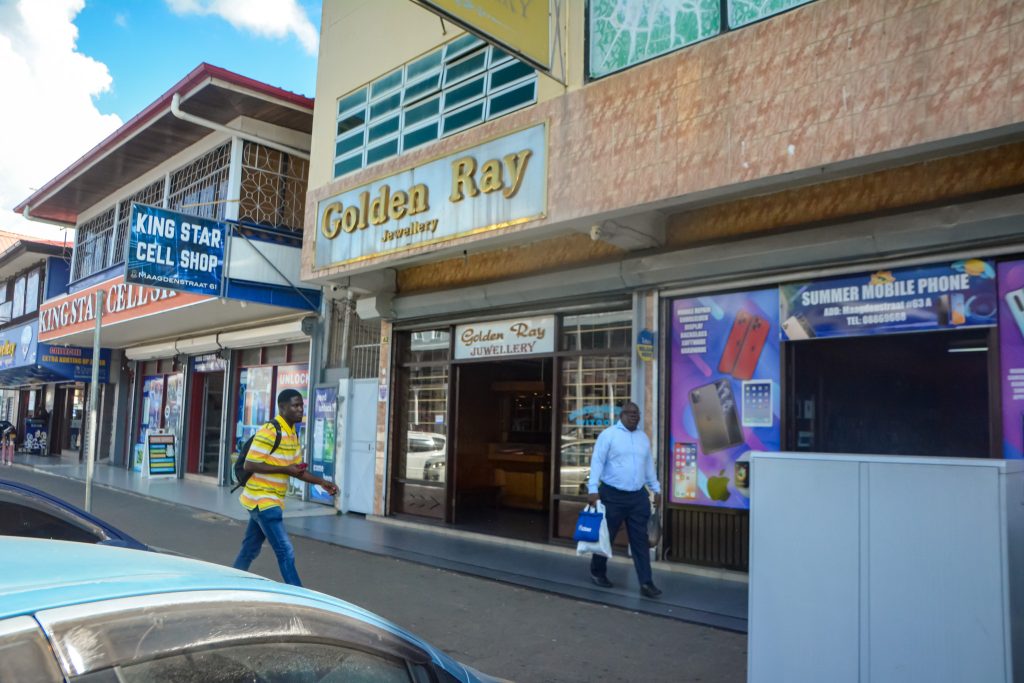
On the last morning in Paramaribo, Rudja tried to take pictures of one of the downtown businesses that buys and sells gold. As soon as she points the camera from the sidewalk across the street, a skinny security guard with dreadlocks and dressed in Bermuda shorts, flip flops, and a tee shirt comes racing out. He also has a shiny black Ithaca shotgun hanging from his shoulder. He speaks Dutch and all we can understand is “no, no, no.” We try to reply in English, but he snatches Rudja’s camera from her and makes sure we erase the pictures. We try to calm him, apologize with our hands. We leave.
We are sitting down to have a beer and get over the shock when Rudja, who doesn’t speak much, makes a confession. We met only a few days ago, when we agreed to do this tour after a colleague we both know put us in contact. One of the few things I know about her is that she was was born in Cayenne, French Guiana, but lives in the Brazilian town of Macapá. I know her writing and pictures focus on environmental issues and human rights. Now she is telling me, just in passing as if it were no big deal, that she grew up on an informal gold mine, known as a garimpa.
“My father was Brazilian, and in the late 1970s he went to French Guiana. He initially was a fisherman and then went to work for gold prospectors. I don’t know if he ever worked in illegal mining. For a while, he worked at a garimpa that was funded by a group of Germans. It was the same system they use now. My brothers and I were born and raised there. We lived in a small house inside a town built for the miners in the middle of the forest. Helicopters would bring food and supplies every week. It was a normal working environment, with many Brazilians and people from other countries as well. My father later had a standoff with the police who were harassing him, and he took us back to Brazil. For me, mining was never a violent or dangerous place; at that time, it was just home.”
Rudja, who up until then had been traveling silently, reveals a lot with her story. I am stunned by the banality of things.
I think of Suriname’s gold circuit, which extends into French Guiana and the rest of the region. It appears to be part of a tacit agreement in which deforestation, pollution, sickness, criminality, and death are all accepted. Oil is the harbor of hope for a different future, but also different threats.
In Guyana, the fastest growing country in the world, the incredible amounts of money have brought in new crises and problems. Before continuing, I return to the pages of a book by Anton de Kom, who wrote the following almost 90 years ago: “The true prosperity of our country will only be reached when all Surinamese, without distinction, are in charge of their destiny and resources […] Suriname, my father, I hope to see you again day. The day in which all misery is erased from you.”