
 Martina Jaureguy
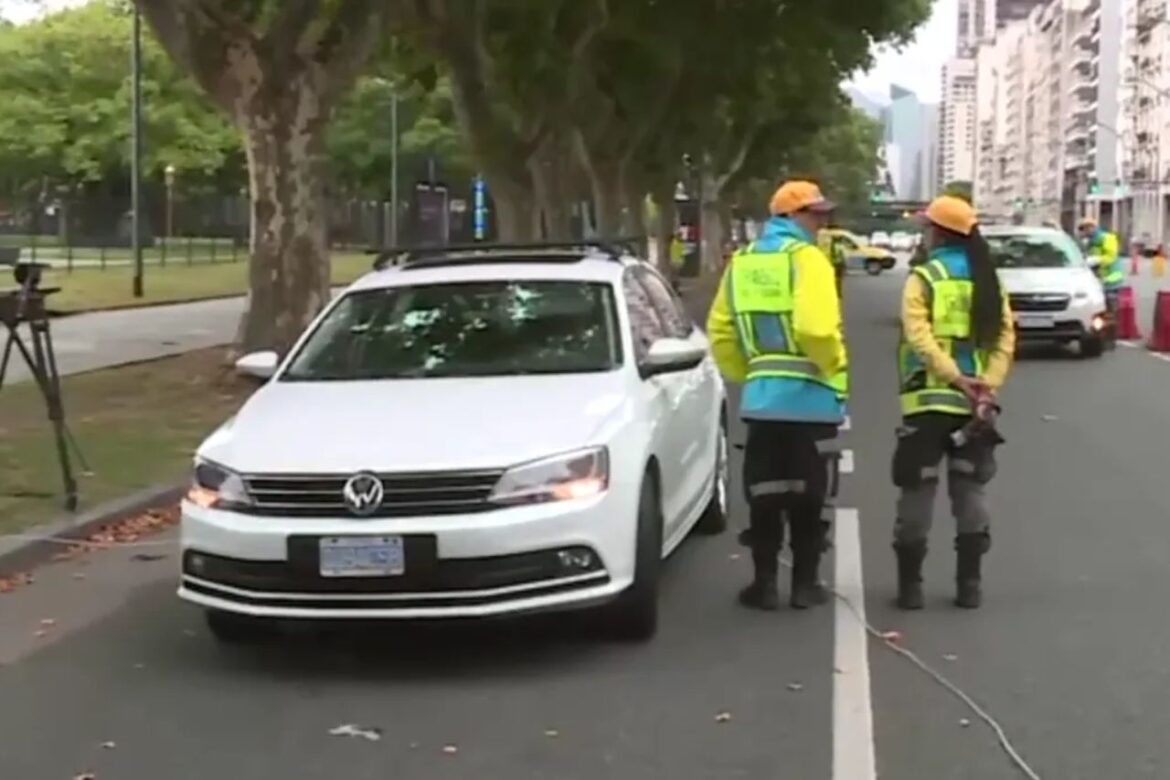
 Two Russian diplomats made headlines in Argentine media on Christmas Day when they were detained at a routine traffic stop in Buenos Aires and refused to comply when police asked them to take a breathalyzer.
The incident has sparked a bit of diplomatic tension. The Russian embassy stepped in, calling it a serious violation of international law and claimed that diplomatic vehicles can’t be subject to traffic stops. A 2022 memo from the Argentine Foreign Ministry, however, specifically says that diplomats have to comply with local traffic laws.
The mishap began on Wednesday at around 10.45 a.m. in the upscale neighborhood of Recoleta. A man driving a car with a distinctive light-blue plate used for diplomats in Argentina was stopped by police. He refused to provide pertinent documentation or step out for a breathalyzer.
The man stayed inside his car for over an hour. This quickly caught the attention of the TV reporters who were covering the traffic stops, a routine Christmas Day event for media outlets. A Russian man who was passing by tried to intervene by acting as an interpreter and trying to convince the man to comply. A woman who saw the news on TV also arrived saying she was a Russian-Spanish translator and a lawyer, calling the detention irregular.
According to a press release by the security ministry, members of the Federal Police’s diplomatic security department were sent to resolve the situation. The man was escorted by police back to the embassy and the car remained in the building.
A very similar situation happened shortly after when another Russian man driving a diplomatic car was also stopped at the spot and refused to comply. The man was escorted to the embassy in the car.
At 1:30 p.m., a man who identified himself as a Russian embassy secretary stepped out of the building to address the reporters. “According to the Vienna Convention on Diplomatic Relations, diplomatic vehicles cannot be subject to any stop, register or seizure,” said the man. “We considered what happened to be a serious violation of international law, especially regarding dispositions on diplomatic immunity.”
A government spokesperson confirmed to the Herald that the Russian Embassy later sent a document to the Argentine Foreign Ministry saying that the detentions violated the Vienna Convention. According to this international agreement, a country must protect foreign diplomats and guarantee that they can move around freely. Article 41 states that diplomats cannot be arrested or detained unless they’ve committed a serious crime.
Diplomats, however, do have to comply with legal procedures as long as it doesn’t affect their diplomatic work.
“We hope that Argentina takes exhaustive measures to avoid the recurrence of such incidents, which are actively used by those who oppose the normal development of the Russian-Argentine relationships,” the document said.
In 2022, the Foreign Ministry sent all diplomatic entities in Argentina a communiqué stating that all diplomats have to comply with Argentine traffic law. It added that those who commit traffic violations would be fined and their cars towed. The communiqué, which cited Article 41 of the Vienna Convention, argued that many neighbours had complained of irregularities committed by cars with diplomatic plates.
Asked if the government would intervene before the situation escalates, Presidential spokesman Manuel Adorni said on Thursday that that is unlikely to happen, and that it was “an almost strictly administrative issue.”
“This was simply a discussion on whether they had diplomatic immunity and the circumstances of the detentions, nothing more,” he said.
Complaints
The Argentine foreign ministry is yet to comment on the situation. Deputy Marcela Pagano, from ruling coalition La Libertad Avanza (LLA), filed a complaint against Buenos Aires City traffic officials for “failing to comply with their public official duties” and “abuse of authority.” There were at least two other similar complaints filed before the federal judiciary and the Supreme Court.
Pagano mentioned a segment of Article 31 of the Vienna Convention in her complaint that says that diplomatic property, including vehicles, cannot be searched by police. She demanded the judiciary investigate whether the traffic stop was deliberately placed a few blocks away from the embassy to “cause a diplomatic incident.”
Former Argentine ambassador to China Diego Guelar said that Pagano’s complaint did not have any base because the Vienna Convention “was not violated at all.”
“Diplomats have to comply with local legislation, identify themselves and show the vehicle’s documentation,” he wrote in a post on X. He added that the Russian embassy has to pay for the fine.
