

 Estefanía Pozzo
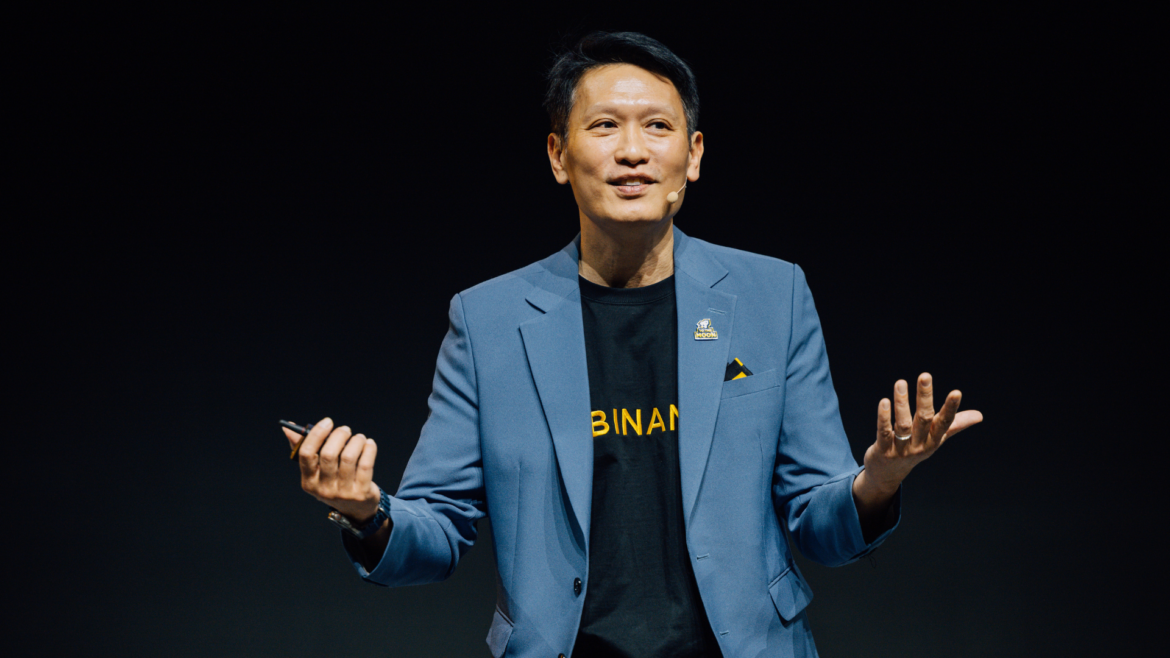
DUBAI. Richard Teng is seated in a circular leather armchair on a hot day in Dubai. As the CEO of Binance, the world’s largest crypto asset exchange, he is focused on his phone answering messages.
Outside, there is a significant buzz on the main stage at Binance Blockchain Week. In just over an hour, the company’s founder, Changpeng Zhao, also known as ‘CZ,’ will make his first public appearance after spending four months in prison in the United States due to a Seattle court ruling for failing to comply with anti-money laundering regulations.
When asked about CZ’s presence at the conference’s closing, Teng responds, “We’re all waiting for that moment. You’ll have to wait to see what happens.”
Teng is optimistic about the future, stating that 2025 will be a better year for the crypto industry than 2024. The Herald’s sister publication Ámbito Financiero interviewed senior management at Binance, who consider 2025 as the year for institutional investors. They believe that the SEC’s approval of Bitcoin ETFs for listing on Wall Street, as well as options for hedging operations, has significantly boosted the legitimacy of the world’s largest cryptocurrency. Additionally, they view the rate cuts initiated by the U.S. Federal Reserve as a positive development.
What are your expectations in terms of regulations, especially in Latin America?
Latin America is one of the fastest-growing regions for crypto, but, as you know, crypto regulation is still at a very nascent stage of development. We are working very closely with policymakers around the world to get them educated about the huge opportunities in the crypto scene and the Foreign Direct Investments they can attract on that front to improve the economy for betterment, to really enhance the talent pool they have domestically but at the same time managing the risks associated with this sector.
Binance is not only the largest crypto exchange globally, but it’s also the most regulated globally. We have more than 20 different jurisdictions that have given us regulatory approval, including Argentina in Latin America, so we continue to push forth on that front. It’s still very early and nascent, and countries regulate crypto slightly differently. We’re hoping for a much greater harmonization of standards in this space, like what you see in the banking and securities market, but I think that harmonization will take a long time to come true.
The United States is facing a presidential election next week. Republican presidential candidate Donald Trump is an active cryptocurrency defender and even has his own crypto company, World Liberty Financial. Do you believe he is more likely to regulate or be more friendly with the crypto industry? What do you expect from the U.S. election results?
I would say that, first and foremost, the fact that crypto has become a topic of discussion and a matter that is influencing people’s decisions on the candidate speaks volumes about the growing influence of crypto. However, this type of conversation doesn’t only happen in the U.S.: it happens globally. I think in many global elections and in many states’ local elections, a candidate won’t always say whether or not they are tech, blockchain and crypto-friendly. That has now become a feature of many elections around the world.
The outcome of U.S. elections can only be determined by U.S. citizens on that front. But as with the rest of the world, we’re watching very closely how it’s going to impact global economic conditions going forward, and not just on the crypto scene.
Regardless of the outcome, I strongly believe that crypto and blockchain have strong momentum, and have strong use cases and innovation going forward.
Do you think Trump would probably be more friendly with regulations than Democratic presidential candidate Kamala Harris?
It’s something that I can’t speculate on. Different countries have their own policy considerations, and different administrations will have their own policy considerations. I can’t speculate, but what I’m very confident of is that crypto and blockchain is a wave that cannot be pushed back. The fact that you have so many institutions now allocating resources and money into this space, the fact that you have so much more recognition today. It really speaks for itself. Something that you probably couldn’t have imagined more than two years ago.
2024 has been a landmark year: the pace of growth is set to be much faster than in the last few years. Can you describe some of Binance’s achievements in terms of user-traded volume?
We continue to overcome challenges and move from strength to strength, and our user numbers have continued to grow quite robustly this year. We have 57 million new users onboard for the year to date. We have more than 237 million users globally by now. We continue to deploy globally, and we are very grateful for our users’ trust and confidence in us. We are the most licensed exchange and the most regulated globally now. We have more than 20 regulatory approvals by now, and we intend to work very closely with global regulators to really foster high standards in this space. As I mentioned, we have devoted a lot of resources to the compliance front, and we have invested very heavily. Given that, there are going to be many more rules and regulations going forward. We intend to make our ability to invest in compliance the key competitive advantage for ourselves.
Binance’s founder, CZ, was condemned by a U.S. court and spent four months in jail. How does the company move forward from the effects of that on its image?
Well, I would say that on the first thing, Binance is a very young company. We started in July 2017, so it’s a seven-year-old company. Even many of the big financial institutions with hundreds of years of history and operating track records run into the same problem that we have in terms of not having a strong enough and robust compliance program.
What’s important is that we acknowledge our mistakes, we now make investments into those mistakes similar to other responsible financial institutions, and we become much better going forward.
Having said that, you have to realize that in 2017, when we first started, the landscape was very different. Most of the rules that you see even today are very, very nascent.
We will continue to invest quite heavily in compliance. There are much more rules and regulations coming through. We are quite blessed that we have the ability to continue to invest very heavily in the compliance space. Our compliance spending increased by more than 30% last year, rising from US$158 million in 2022 to US$213 million last year. And this year the spending will go up even more. As compliance spending and demands increase, it will be tougher for many of the smaller exchanges to comply with them fully. And in that sense, we intend to make compliance a key competitive advantage for ourselves.
Almost a year since reaching a settlement with the U.S. government, how is Binance’s relationship with its compliance monitors?
They have been appointed, so we have two monitors. We do work very closely with the monitors. They will be with us. I always tell people that there’s a key positive. It’s not only us saying that we have a very robust anti-money laundering and robust compliance program.
You said that you don’t want to focus on the U.S., but it’s a huge market. When will Binance turn its attention there?
At this point in time, we are not looking at the U.S. market as an international platform. We have seen very robust growth internationally. That’s where we’re going to spend our time and energy.
Last year, you mentioned that you didn’t feel the need to have a global headquarters in any country. Do you still feel that way?
It’s something that we actually spend a lot of time looking at, right? So as you can see, Binance is moving into a new stage of development. We have instituted a board of directors with three new independent directors on the board ready to chart the strategy and the path forward for us as an entity. So I think that one global headquarters is something that we want to do and it’s something that’s familiar to regulators.
We are in deep conversation with several jurisdictions, but as you can imagine these are things that are quite complex. You have many different considerations, from simple things like taxation, to where you can base your IP rights, or where you can bring the talent expertise into that region to support it, to the regulatory framework in which regions.
We are looking at a few jurisdictions very closely and engaging very deeply with the government in those jurisdictions.
Do you still believe there is no need for Binance’s IPO?
At this point in time, there are no plans for an IPO. The company has enough resources to do all the deployment that’s needed.
Do you see the IPO as just a way of raising capital? Because an IPO could be for different reasons.
It can be for different purposes. But our attention is devoted to building a very sustainable platform, the best of its kind. A lot of our time and energy is dedicated to that. We have not quite devoted the same time and energy to thinking of an IPO at this point in time.
What is Binance’s business plan for the years to come?
I would say that 2025 is going to be a better year than 2024 for several reasons. If you look at the economic conditions, you can see by now that inflation is more or less under control in most countries, and central banks are starting to reduce interest rates. That will provide a boost for most asset classes, including crypto. So that’s one factor.
And if you look at what’s happening in 2024 for the crypto scene especially, there are much clearer regulations coming through. A lot of regulators are now putting time and resources in place to better understand this space and formulate a framework to start regulating crypto. And that gave it the recognition and the credibility that it deserves. The approval of Bitcoin ETF first in the U.S. and subsequently around the world also added credibility and recognition.
The top institutions around the world, be it from the U.S., from Europe, or from Latin America, are starting to invest very heavily. All of them have a crypto agenda and blockchain agenda, and they are starting to increase their resource allocation to this space.
For all these reasons, and normally after the Bitcoin Halving, which happened in April, you will see much more robust growth in crypto. A lot of innovations and use cases are being pushed forward and being developed at the moment. So that’s why I always say that 2025 is going to be a much better year than 2024.