
 Facundo Iglesia
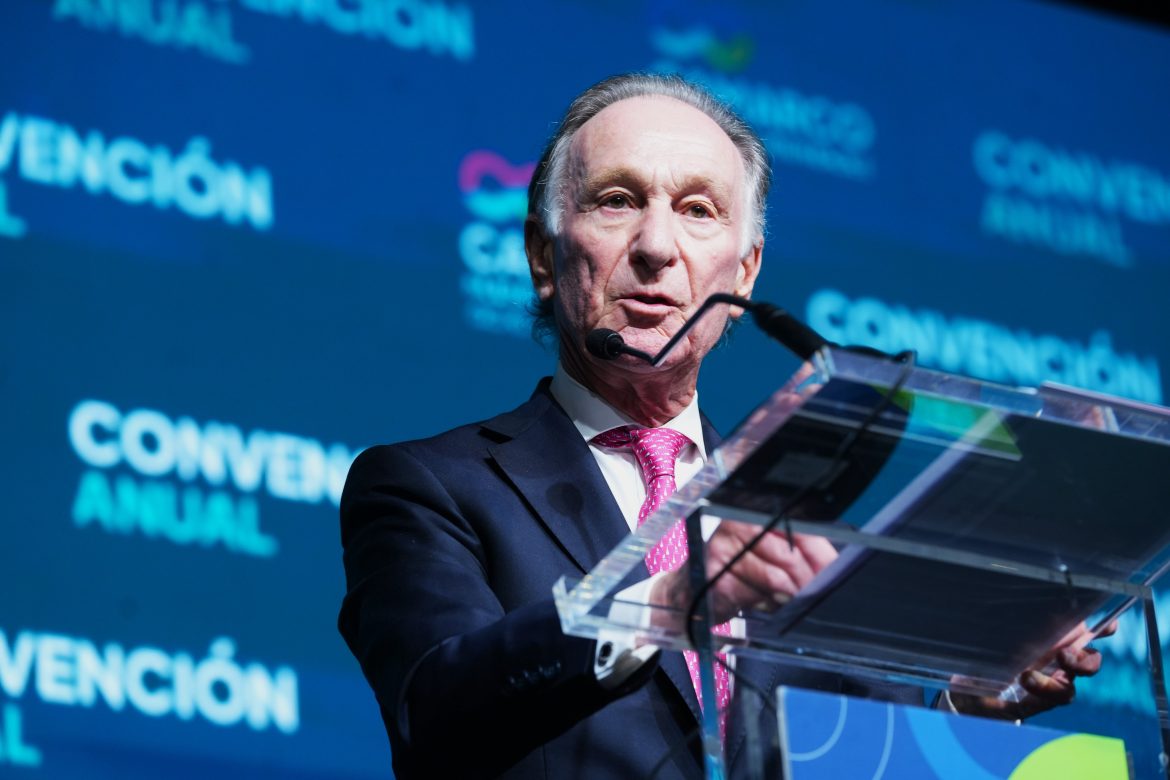
On the day the Milei administration kickstarted its bid to privatize the country’s roads, the head of Argentina’s construction chamber (CAMARCO) spoke about the need for infrastructure in the institution’s annual convention.
“Without efficient infrastructure, there is no competitiveness. Without connectivity, there is no productivity. Without sustained investment, there is no growth,” said Gustavo Weiss, the head of CAMARCO, in his opening speech during the chamber’s convention on Tuesday. The Herald learned that Economy Minister Luis Caputo was invited to the event, but declined, citing “scheduling issues.”
The only government representative who attended was Public Works Secretary Luis Giovine, who celebrated the termination of several public works and their transfer to provincial administrations.
Government goes for a fully privatized infrastructure
Before taking office, President Javier Milei, a self-defined anarcho-capitalist, said that even city streets should be privatized.
So far, the government has only started 18 public works and has paralyzed more than half of those started during the previous administration. According to a report by the Centre of Argentine Political Economy (CEPA), for every AR$100 allocated to public works in the first quarter of 2023, AR$18 was spent by the same period this year.
Earlier that day, the government published an open bidding for the concession of the Rosario-Victoria bridge in Santa Fe and Route 14 in Entre Ríos. The government aims for private companies to repair and maintain a great deal of the country’s public infrastructure. Companies would recoup their investment through toll booths in concessions that would last from 20 to 30 years.
According to an official website, the government is aiming that “private capitals can invest in the operation and maintenance of these national routes and thus reduce the expenses that this generates for the national treasury.”
The administration is planning to open bids for ten highways, which include several national routes each. More than 9,340 kilometers will be tendered, distributed in sixteen sections that represent 20% of the national road network and 80% of the country’s traffic.
In a conversation with several media outlets, including the Herald, Weiss estimated that the remainder of the Argentine roads “do not have traffic volume even to do the maintenance of the route, and there is no possible toll rate.” For Weiss, the national government transfers should be responsible for maintaining them. He argues a complete privatization of the country’s road infrastructure would be unsustainable. “The only road works that can be executed from scratch in exchange for tolls are the accesses to the city of Buenos Aires and the city of Córdoba — they are the only ones that have sufficient traffic volume to pay for the investment in road construction,” he said.
Weiss added that for countries with private investment in infrastructure (like the United Kingdom, Canada, Australia, the United States and some European countries), there are some indispensable conditions that Argentina has not met — “long-term funding in capital markets, high toll rates in dollars, legal certainty, [and] macroeconomic stability.”
“But even so, in those countries, private investment in infrastructure does not exceed 15%. The remaining 85% is public investment at three levels: national, provincial, and municipal,” he said.
Provincial and private investment
Weiss said that during the Milei administration, some provincial administrations have absorbed public works that were national, and that some of them — like Buenos Aires, Buenos Aires City, Mendoza, Santa Fe, Santa Fe, and Córdoba — have allocated considerable budgets to infrastructure.
As for private infrastructure construction, Weiss said that there is demand in the oil, gas, mining, and communications sectors. However, he added that housing, including apartment buildings, is going through “a serious cost problem.”
“The cost of construction, measured in dollars, has increased significantly, and today it is between US$1,300 and US$1,500 per square meter,” he said, adding that, a year ago, even with a higher exchange rate, it was worth between US$700 and US$800.
He said that construction plunged in 2024, but somewhat stabilized in 2025. “Employment is an accurate thermometer of activity. We lost 120,000 jobs [in the sector] on June 23 and 24. Since then, employment has been stable — neither increasing nor decreasing,” Weiss said.
“Today, the real estate development sector does not have the activity it should have due to this phenomenon,” he added.
