
 Martina Jaureguy
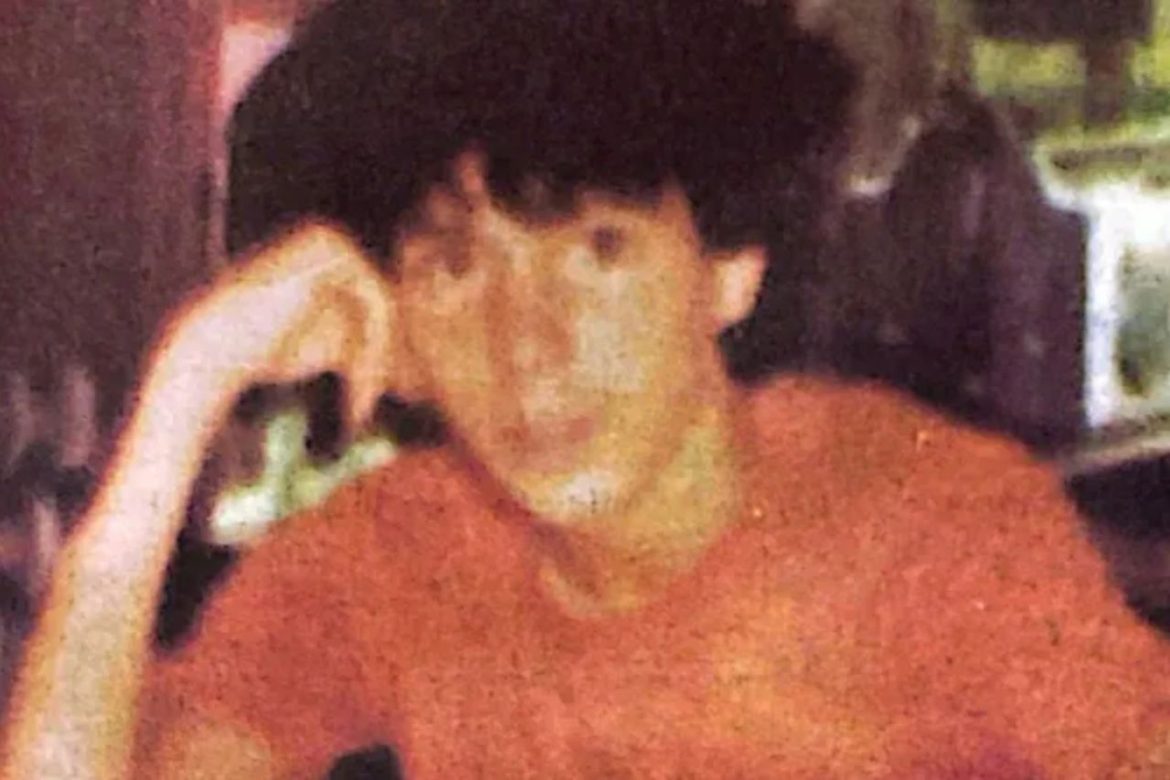
 Forensic anthropologists have identified the body found in May buried in a property adjacent to a Buenos Aires house that late Argentine pop-rock icon Gustavo Cerati used to rent in the early 2000s. The remains belong to Diego Fernández Lima, a 16-year-old who had been missing since 1984. Marks present on his bones suggest he was murdered.
News of the identification was confirmed on Wednesday by the Argentine Team of Forensic Anthropology (EAAF, by its Spanish initials), which was requested to take part in the case by the Criminal Prosecution Office n°12, led by prosecutor Martín López Perrando.
After news of his identification broke out, third-division football club Excursionistas revealed that Diego was playing for the team at the time of his disappearance, and shared an emotional message written by late club board member Daniel Viviani in 1985, saying the team always remembered the boy in the locker room before playing a game.
With the mystery of the victim’s identity solved, two unsettling questions now deepen the mystery in the case: why was the boy killed over 40 years ago, and who did it? This will be the focus of the judiciary’s investigation from now on.
Given their role as anthropological experts, all the EAAF can confirm about Diego’s death is what can be observed from his bones. A source from the team told the Herald that they detected a lesion on his ribs made with a sharp object, as well as cut marks on his limbs. They were all done perimortem, which means they happened around the time of his death.
This could mean that Diego was stabbed and that the perpetrator attempted to dismember him before finally deciding against it. In addition, his remains were buried shallowly, around 60 centimeters deep. All this could suggest that the boy suffered a violent death and that the murderer attempted to hide the evidence in a rush. The EAAF said that they cannot conclusively affirm this in the report handed to the prosecutor’s office, stating that their role is only to inform the information present in the bones and not to make an interpretation out of it.
The case
Diego was last seen on July 26, 1984. His younger brother Javier said in an interview with América news channel that Diego left the house that day while eating a mandarine, and told his mother that he was stopping at a friend’s house before going to school. He couldn’t recall who was the friend his brother mentioned, although he said it was a subject of many interviews his parents had with the police at the time.
“We need justice for my brother, and for my dad, who died searching for him. For my mom, my sister and me,” Javier said, visibly emotional. “He was 15, what could he have done? I can’t wrap my head around it. He was good. He went to school, he had friends.”
Javier added that, since his brother went missing the year after the last military dictatorship in Argentina ended, as he grew up he believed Diego could have been kidnapped by authorities and disappeared. The police’s theory at the time was that Diego had left the house on his own accord, possibly to meet with a girl.
Diego’s brother said that, until now, the family did not have any leads that could link the disappearance with the house located at Congreso avenue 3748, Coghlan, or its inhabitants. They only knew that one of Diego’s friends had testified seeing him around the area.
The remains were buried in the limit with the house Cerati briefly rented, in the garden of a property belonging to a family reportedly named Graf. Outlets have reported that prosecutor López Perrando is investigating one of Diego’s classmates and friends who used to live in that house. Any crimes that may have been committed, however, have now reached a statute of limitation due to the passing of time, and cannot be punished.
How was Diego identified?
The Herald was able to verify from sources close to the investigation that the identification was possible after one of Diego’s nephews saw news about the case and thought that the information available at the time — that the remains belonged to a teenage boy, dating from around the mid 1980s, and that they were found in the Buenos Aires neighborhood of Coghlan — matched the family stories he had heard about his missing uncle.
After the nephew made the connection, the Fernández Lima family decided to contact the EAAF. Diego’s mother provided a blood sample and it was a perfect match with the victim’s DNA.
The EAAF said that, like in other cases of forced disappearance, they conducted genetic, anthropological and archeological analysis techniques that allowed them to identify Diego’s identity and verify lesions present in his bones.
EAAF is a world-renowned team that works in complex identification of remains in Argentina and across the planet, including identification of dictatorship victims, Malvinas War soldiers, and current-day forced disappearance victims such as Luciano Arruga.
