
 Martina Jaureguy
 This story has been updated at 5:15 p.m.
Peronism is reworking its electoral strategy after the shock of ex-President and party leader Cristina Kirchner’s conviction, which includes a 6-year house-arrest sentence and a lifetime ban on public office. She had originally planned to run for Buenos Aires province local lawmaker in September.
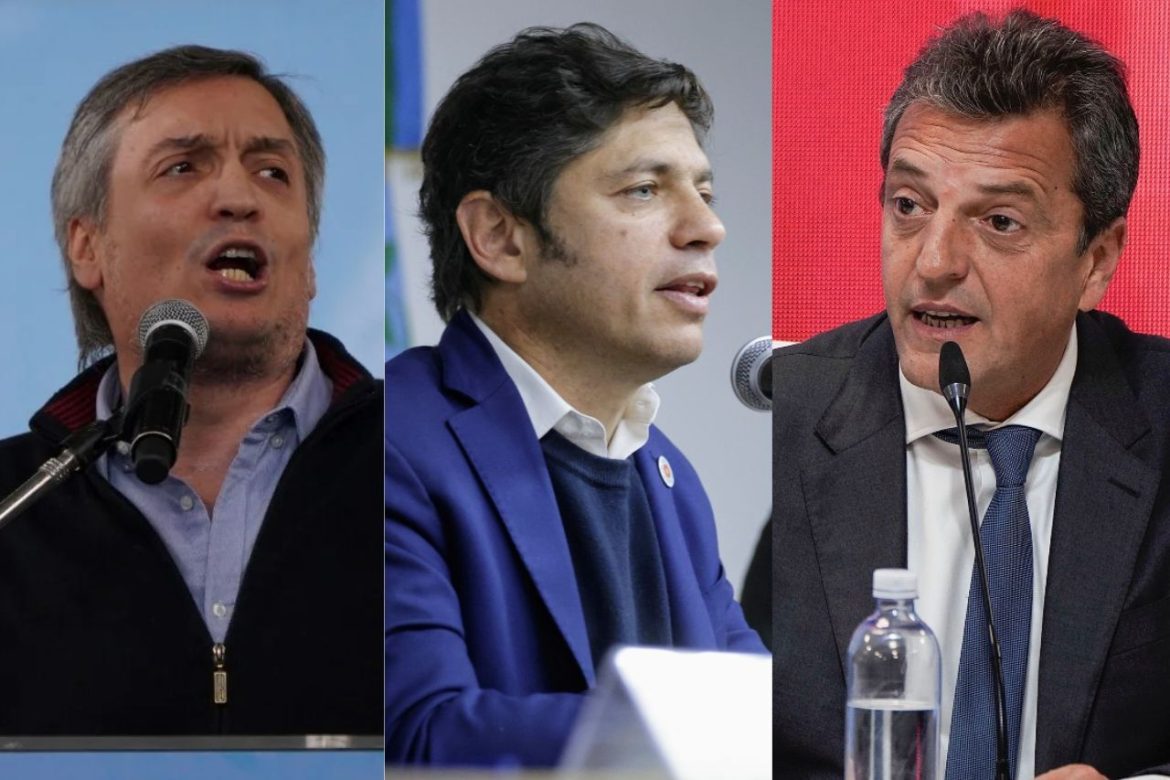
On Sunday, Buenos Aires Governor Axel Kicillof, former Economy Minister and leader of the Frente Renovador Sergio Massa, and national deputy Máximo Kirchner — Cristina Kirchner’s son and head of the Kirchnerist youth group La Cámpora — moved forward in talks about competing in the provincial and national legislative elections in unity, after months of speculations about Kicillof’s potential breakup with the main Peronist sectors.
In a meeting in the provincial government’s headquarters in La Plata, the Kicillof, Massa and Máximo Kirchner — along with members of each of their sectors — discussed creating a unity electoral front both for the September 7 provincial elections and the October 26 national elections. Candidates will compete for seats at the local and national Congress respectively.
However, the negotiation is still not closed, a source close to Kicillof told the Herald. “There were no concrete definitions. They moved forward toward creating a unity scheme,” the source said. “There could still be separate tickets if an agreement isn’t reached. We are convinced that the best way to compete in the election is in unity tickets.”
The idea is for the three factions to participate in the design of the tickets, the Herald learned from a source close to Massa that was present at the meeting. Candidates would be chosen by a select group and there will be “triumvirates” representing each sector to carry out the campaign.
While the source close to Massa said that they decided that Kicillof will be in charge of the electoral strategy, the source from the Buenos Aires government clarified that the governor will not make the decisions himself, but rather that he will promote the campaign, “just like he did in 2019, 2021 and 2023”.
According to both sources, the idea is to select the candidates that will lead the sectional tickets based on who are the most competitive leaders despite which sector they belong to. After Kirchner was put in house arrest, Kicillof had made the point that the candidates should be those with highest vote intention, but the source close to the governor said this was not “definitively decided” in the meeting.
According to the source from Massa’s team, although the three sectors would have to consent, the decisions regarding the electoral strategy and the head of the Buenos Aires province ticket in the national elections would be made by Kicillof, “because he is the governor and has more representativity.” There are “no chances” of Kicillof breaking up and having his new political movement, Movimiento Derecho al Futuro, run separately, the source added.
The main point of the electoral campaign will revolve around how to fight President Javier Milei’s austerity and debt-based policies, defending Cristina Kirchner’s innocence and “preventing the chainsaw from entering the Buenos Aires province,” the sources said.
After months of infighting and chances of internal breakups, Kirchner’s imprisonment seems to have cemented Peronism’s unity in a key electoral season, in which Milei’s La Libertad Avanza (LLA) has chances of earning many seats in the national and provincial Congress. In the province, negotiations are moving forward towards an electoral alliance between LLA and right-wing ally PRO, which would give the Libertarians considerable leverage.
You may also be interested in: Cristina Kirchner out of the ring, but not off the map
Important decisions have to be made soon. On July 9, all sectors who want to compete in the provincial elections have to formally present their coalitions before electoral authorities. All candidates have to be confirmed by July 19, and it remains a mystery who will replace Cristina Kirchner as head of the ticket representing the third electoral district, the most populous one in the province.
72-year-old Cristina Kirchner is not personally participating in the debate, although she is likely in tune with her son’s positions and is following the developments. She still speaks with Massa on the phone once a week, the source from his team confirmed.
On Saturday, the Partido Justicialista will hold a Congress in which it is expected to take further steps to define the strategy. Smaller Peronist parties who are part of the alliance — such as Massa’s Frente Renovador or social leader Juan Grabois’ Patria Grande — are expected to sign documents formally confirming their participation in the coalition.
Not all Peronist sectors were invited to the Sunday meeting. Esteban Echeverría Mayor Fernando Gray — a stern critic of Kirchnerism and Kicillof — was not called to participate and questioned that “this is a ‘unity drill,’ because there is no actual unity.”
“It’s just for the picture and to design the candidate lists, but there is no sincere dialogue aimed at creating a serious, responsible unity front,” Gray told the Herald. He added that he and other dissident Peronists are considering creating a new electoral front to compete in the 2025 elections against the unity front that is in the works.
